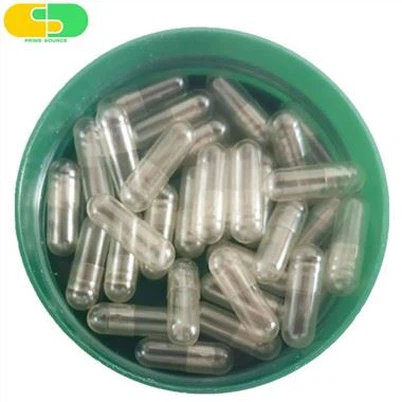
What Is The Use Of Hollow Capsules?
Leave a message
Hollow capsules are an inner packaging material widely used in the fields of food, medicine, etc. Their core function is to provide an independent and hygienic packaging environment for solid or powdered contents.
These types of capsules are usually made of edible materials, which can be directly filled with nutritional supplements, drugs, or used as carriers for functional foods.
Its transparent or semi transparent appearance design makes it easy for consumers to observe the state of the internal filling, while extending the shelf life of the contents through a sealed structure.
1, Technical principles and core components:
The main raw material of hollow capsules is bone gelatin, which is a natural protein extracted from animal bones and has excellent film-forming and biocompatibility properties.
The production process is divided into three key steps: in the sol stage, gelatin particles are dissolved in warm water to form a uniform gel solution; During the embryonic stage, the adhesive liquid is shaped into a cylindrical thin-walled structure through a mold; The cutting stage involves cutting the embryo into standard sizes and completing the fitting of the upper and lower parts.
This process ensures the sealing and dimensional accuracy of the capsules, while avoiding the use of chemical additives.
2, Specification classification and usage scenarios:
According to structural differences, hollow capsules can be divided into two specifications: transparent split and transparent composite.
The split type capsule consists of independent upper and lower sections, suitable for scenarios that require staged release or mixed filling; The composite capsule achieves single step filling through pre bonding design, making the operation more convenient.
Its application areas cover pharmaceutical preparations (such as traditional Chinese medicine powder packaging), nutritional supplements (such as vitamin capsules), and functional foods (such as probiotic carriers).
Due to meeting the inner packaging standards, these capsules can directly come into contact with the contents without the need for additional lining materials.
3, Technical highlights and practical advantages:
Compared to traditional packaging forms, hollow capsules have significant advantages in safety and convenience.
Bone gelatin material can slowly dissolve at body temperature, ensuring precise release of contents; Transparent design facilitates quality inspection and consumer identification; Standardized dimensions (such as 1 # specification) are compatible with most automated filling equipment to improve production efficiency.
In addition, the positioning of its inner packaging avoids the risk of cross contamination with the outer packaging, meeting the strict hygiene requirements of the food and drug industry.
For products that require cross-border export, the stability and compliance of these capsules have also been recognized by the international market.
4, Operating standards and precautions:
When using hollow capsules, attention should be paid to environmental humidity control. It is recommended to operate under conditions of relative humidity of 40% -60% to avoid moisture absorption and deformation of the capsules.
The filling equipment needs to be cleaned regularly to prevent cross contamination of different batches of contents.
When storing, it should be kept away from high temperatures and direct light sources, and sealed to prevent gelatin oxidation.
For manufacturers who require customized requirements, special specifications or colors can be developed by adjusting the mold size and adhesive formula, but it is necessary to ensure that the final product meets relevant safety standards.