

Company Profile
Prime Source Group is a top supplier in pharmaceutical industry and chemical industry.
Empty Capsules, Aluminum Foil, PVC Sheet and Plastic Bottles are our main pharmaceutical related products. They are manufactured in three professional factories with rich experience and GMP workshops.
Why choose us?
100% customer satisfaction
Prime Source is in charge of marketing above pharmaceutical related products with superior service and immediate feedback. Customer satisfaction is our ultimate mission.
Best service
Supply quality products and services with consistent quality. Offer highest credibility, best product quality and stability and soonest response to our customers.
Rich experience
With 20 years of R&D experience, we focus on the two industries of pharmaceutical packaging and food packaging, and maintain strategic cooperative relations with many brand enterprises in the industry.
Global shipping
Our products support global shipping and the logistics system is complete, so our customers are all over the world.


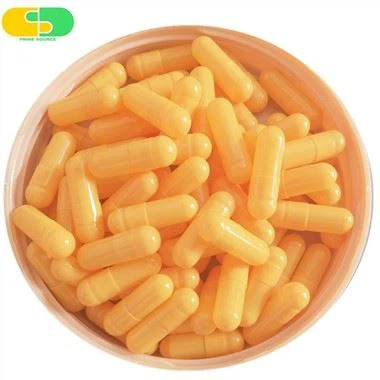
The empty capsule is composed of a cap and a two-section capsule shell, which are refined from medicinal gelatin and auxiliary materials. Mainly used to hold solid and liquid medicines. For example, self-made powders, health products, pharmaceuticals, etc., solve the problems of difficult entrance and poor taste for users, and truly realize that good medicine is no longer bitter.
Benefits of Empty Capsules
Flexibility in dosing
One of the biggest advantages of using empty capsules is the flexibility they provide in dosing. With empty capsules, you can easily adjust the dosage of the substance you are taking by simply filling more or fewer capsules. This is particularly useful for substances that require a very specific dose, such as medication or supplements.
Convenient and portable
Empty capsules are also very convenient and portable. You can fill them with your desired substance and take them with you wherever you go. This is especially useful for people who travel frequently or who have busy schedules.
Tasteless and odorless
Another advantage of using empty capsules is that they are tasteless and odorless. This is particularly useful for substances that have a strong or unpleasant taste or odor. By encapsulating the substance, you can avoid the unpleasant taste or odor and still get the benefits of the substance.
Cost-effective
Using empty capsules can also be a cost-effective way to take supplements or herbs. By buying the empty capsules and filling them yourself, you can save money compared to buying pre-made supplements.
Easy to digest
Empty capsules are also easy to digest. The gelatin or HPMC used to make the capsules is easily broken down by the body and does not interfere with the absorption of the substance inside.
What is an Empty Capsules Made Of
The raw materials of empty capsules can generally be divided into gelatin capsules and vegetarian capsules.



Gelatin is a white or light yellow, translucent, micro-glossy sheet or powder that is degraded by collagen in connective tissue such as animal skin, bone, and sarcolemma. It is a hydrophilic colloid of macromolecules and is a low-calorie health food with high nutritional value. This material can generally be used to make confectionery additives, frozen food additives, and the like. In addition, gelatin is widely used in the pharmaceutical and chemical industries.
The water and inorganic salts in gelatin account for about 16%, and the protein content accounts for more than 82%. Similar to the parent collagen, gelatin is also composed of 18 kinds of amino acids, among which the content of the sub-amino acids Pro and Hyp is high. The triple helix structure in gelatin gel mainly relies on intramolecular hydrogen bonding and hydrogen bonding hydration. Pro-NH, Hyp-OH and other amino acid side chain groups and water molecules can form hydrogen bonds, which is beneficial to the triple helix. The structure is stable. It is an effective protective colloid that prevents the accumulation of crystals or ions and stabilizes the heterogeneous suspension as an emulsifier in oil-in-water dispersion formulations.
Most capsules are made of gelatin. This grade of gelatin meets the stringent requirements for pharmaceutical products. In general, the capsule manufacturing process has the following steps. First, a layer of gelatin film is formed on a stainless-steel mold. The capsule is formed after the film has dried and hardened. Finally take it off the mold. The mold is available in two sizes for the capsule body and the capsule cap (slightly larger).
Another large class of capsules are plant capsules. The outer shell of a plant capsule is generally prepared from a material such as starch, HPMC, Pullulan. With the popularity of natural and vegetarian concepts, this vegetarian capsule has been widely filled in the pharmaceutical market in many countries around the world. Vegetarian capsules can be divided into various types, such as pullulan capsules and HPMC (Hydroxypropyl methylcellulose) capsules. Pullulan is an extracellular water-soluble mucopolysaccharide similar to dextran or xanthan gum produced by fermentation of Aureobasidium pullulans. It was in 1938 by R. A special microbial polysaccharide found by Bauer. Due to the unique structure and properties of the polysaccharide, it has broad application prospects in the pharmaceutical, food, petroleum, chemical and other industries. Because it can be degraded and utilized by microorganisms in nature, it will not cause environmental pollution, so it is known as pollution-free plastics.
Simple Tests To Evaluate The Quality of Empty Capsules
Permeability and sealing
One easy test carried out is the test of physical integrity. It is done by visual inspection. Soft gelatin capsules are checked for leakages and hard gelatin capsules are checked for any breakage or opened cap.
Potency and impurity content
Capsules are also tested for quality and potency. Not just that. They are also tested for the presence of impurities or any other related substances. Any other substance apart from what is stated on the label, or the presence of an identified substance at a level different from the predefined specifications is considered an impurity.
Weight variation test
The weight uniformity test of capsules is carried out to identify weight or content variation in a batch. There are recommended procedures for carrying out weight uniformity tests for both hard and soft gelatin capsules. Generally, any deviation from the specified range will render the batch unacceptable.
Uniformity of content
Uniformity of content is usually carried when the content of the drug is specified in the monographs, and more importantly, if the capsule batch fails the weight uniformity test. There is no need for this test if the weight of the capsules is filled.
The monograph provides a complete guide on the specifications of virtually all drug products, and any variation from what’s specified would mean the batch does not pass the test.
Disintegration time test for capsules
Disintegration tests are performed to determine the ease at which the capsule shell will release the drug content fully for dissolution, and absorption from the GI tract. There are standards and procedures for performing this test. Both soft and hard gelatin capsules follow the same steps and apparatus as stated in the official books.
The capsule is said to have passed the test if it fully disintegrates into a soft mass with no firm core and only some fragments of the shell. Anything other than that would mean the capsule has failed the test.
Moisture content
One of the easiest ways for capsules to lose their potency and degrade rapidly is the presence of moisture. The Karl Fisher titrimetry measures the water content of capsules to ensure the correlation of the water content with the degradation features of the drug.
Microbial content
Microbes can degrade pharmaceutical products easily. Consuming contaminated products can also result in mild or severe infections depending on the strain of microbial contaminants. Hence, the microbial content of capsules is evaluated.
Microbial content tests are done to check for the presence of the prohibited strains of bacteria in the capsules. These tests are performed by incubating the capsules for a specified number of days and checking for microbial growth in the culture.
The procedures, culture medium, test duration, and aseptic conditions for successful assessment are stated in the compendium.
Shelf-life test
Shelf-life tests are performed to evaluate how long the capsules can stay intact under normal use and storage conditions. The test also helps determine the usability and favorable conditions for the capsules.
Expert Tips for Properly Storing and Organizing Empty Capsules
Understanding the importance of proper storage
Proper storage and organization of empty capsules are essential for maintaining their quality and integrity. In this blog post, we will share expert tips and best practices for storing and organizing empty capsules to ensure they remain in perfect condition for use. Whether you are a seasoned supplement manufacturer or a newcomer to the industry, these tips will help you optimize your capsule storage and organization process.
Maintaining optimal temperature and humidity levels
Maintaining the right temperature and humidity levels is critical for preserving the quality of your empty capsules. Store capsules in a cool, dry place with a consistent temperature between 58°F and 79°F. Avoid exposure to direct sunlight, hot water, and high temperatures, as heat can cause capsules to deform or become brittle. Keep humidity levels between 35% and 55% to prevent moisture absorption, which can lead to capsule swelling, sticking, or dissolution. Use dehumidifiers or climate control systems in your storage area to regulate these conditions effectively. By monitoring and controlling temperature and humidity, you can ensure that your capsules remain in peak condition for longer periods. Additionally, remember that capsules generally expire five years from the date of manufacture, but if stored correctly, most capsules can have a shelf life of about seven years. For dry powders, use standard vegetarian and gelatin capsules, while vegetarian oil-grade capsules should be used for oil-based liquids.
Choosing the right storage containers for your empty capsules
Selecting the appropriate storage containers for your empty capsules is crucial in preserving their quality. Opt for airtight containers that are moisture-resistant to prevent any damage or contamination. Consider clear containers for easy identification of different capsule sizes and types. Additionally, labelling each container with the specific contents can aid in efficient organization and retrieval. Invest in high-quality storage solutions that are durable and stackable to save space and maintain orderliness in your storage area. By choosing the right storage containers, you can ensure that your empty capsules remain in optimal condition for future use.
Organizing your empty capsules by size, shape, and type
Once you have secured the appropriate airtight containers for your empty capsules, the next step is to organize them effectively. Sort your capsules by size, shape, and type to streamline the process of locating the ones you need for future use. Consider using separate containers or compartments for different sizes or types of capsules to avoid any confusion. Label each container clearly to ensure quick and easy identification. By categorizing your empty capsules in a systematic manner, you can enhance efficiency, prevent mix-ups, and maintain a well-organized storage system.
Labeling and tracking your empty capsule inventory
Labeling and tracking your empty capsule inventory is crucial for maintaining organization and efficiency. Create a detailed inventory list noting the quantity, type, and expiration date of each capsule. Implement a labeling system on your containers that corresponds to your inventory list for easy reference. Regularly update your inventory and rotate stock to use older capsules first. By tracking and labeling your empty capsules effectively, you can ensure easy access and prevent any wastage due to expiration. Stay focused on these organizational practices to maximize the shelf life and usability of your empty capsules.
Maintaining a clean and organized storage area for your empty capsules
Is essential for preserving their quality. Designate a specific area in your storage facility that is clean, dry, and away from direct sunlight or high temperatures. Utilize storage containers or shelves to keep your empty capsules neatly organized and easily accessible. Regularly clean and inspect your storage area to prevent contamination or damage to your capsules. By establishing a clean and organized storage space, you can prolong the shelf life of your empty capsules and ensure they remain in optimal condition for future use.
How to Choose the Right Empty Capsules for Your Probiotics
Capsule size
Empty capsules come in different sizes, ranging from 000 to 5, with 000 being the largest and 5 being the smallest. The size of the capsule will depend on the dosage and formulation of your probiotic supplement. Larger capsules may be more suitable for higher dosages or for encapsulating larger probiotic strains, while smaller capsules may be appropriate for lower dosages or for encapsulating smaller probiotic strains. Consider the dosage requirements of your probiotics and choose a capsule size that can accommodate them effectively.
Capsule material
Empty capsules are typically made from either gelatin or vegetarian alternatives like hypromellose (HPMC) or pullulan. Gelatin capsules are derived from animal sources and provide good stability and ease of filling. Vegetarian capsules, on the other hand, are suitable for individuals with dietary restrictions or preferences and offer similar performance and stability. Consider the needs of you or your customer and select the capsule material accordingly.
Capsule color and transparency
The appearance of the capsule can also play a role in the overall product presentation. Empty capsules are available in a variety of colors, including clear and opaque options. Consider the branding and packaging requirements of your probiotic supplements and choose a capsule color that complements your product design.
Capsule compatibility
Ensure that the empty capsules you choose are compatible with the formulation of your probiotic supplements. Some probiotic strains may require specific conditions or ingredients for optimal viability and effectiveness. Consult with your probiotic manufacturer or supplier to determine any specific requirements for encapsulating your probiotics and select capsules that can accommodate those needs.
Certifications

Our Factory
Prime Source Group is a top supplier in pharmaceutical industry and chemical industry. Empty Capsules, Aluminum Foil, PVC Sheet and Plastic Bottles are our main pharmaceutical related products. They are manufactured in three professional factories with rich experience and GMP workshops.

FAQ
As one of the leading empty capsules manufacturers and suppliers in China, we warmly welcome you to buy or wholesale high-grade empty capsules for sale here from our factory. All our products are with high quality and low price.