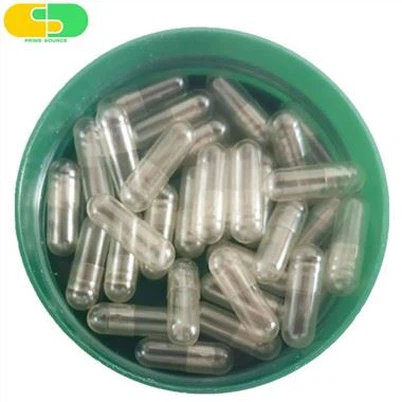
Storage Method Of HPMC Hollow Capsules
Leave a message
1, Storage environment requirements
temperature control
Recommended range: 10 ℃~25 ℃ (stored at room temperature), avoid extreme temperatures.
High temperature impact: Exceeding 30 ℃ may cause the capsule shell to soften, adhere, or even deform, affecting the filling accuracy.
Low temperature risk: Below 5 ℃, the capsule shell may become brittle, increasing the risk of rupture, especially during mechanical handling.
Humidity management
Relative humidity: 35%~65% (RH).
High humidity hazard: When the humidity exceeds 70%, the capsule is prone to moisture absorption and expansion, leading to adhesion or mold growth.
Low humidity issue: Humidity below 30% may cause the capsule shell to lose water and become brittle, affecting its sealing performance.
Lighting and ventilation
Avoid light storage: Avoid direct sunlight or strong light exposure to prevent material aging caused by ultraviolet rays.
Ventilation requirements: The storage environment should be well ventilated to avoid the accumulation of humid air, but direct blowing should be prevented from causing the capsules to dry too quickly.
2, Packaging and Container Selection
Original packaging retention
Unused capsules should be packaged in original aluminum foil bags or plastic bottles containing desiccants (such as silicone particles) to maintain sealing.
After opening, it should be used as soon as possible. The remaining capsules should be resealed and labeled with the opening date.
Secondary packaging materials
Moisture resistant container: Glass jars or plastic drums with sealed rings can be used, lined with food grade desiccants.
Light shielded outer box: If stored for a long time, it is recommended to place the container in a non transparent cardboard box to further isolate light.
3, Storage location planning
Isolation requirements
Keep away from chemical reagents, disinfectants, perfume and other volatile substances to prevent the chemical reaction of HPMC.
Avoid coexisting with strong oxidants (such as potassium permanganate) and acidic substances (such as hydrochloric acid) to prevent material degradation.
Shelf management
Capsules should be placed flat or vertically to avoid deformation caused by tilting.
The spacing between shelves should be greater than 10cm to facilitate air circulation and reduce local humidity accumulation.
4, Special scenario handling
Short term high temperature exposure
If short-term (<24 hours) exposure to an environment of 30 ℃~35 ℃ is required (such as during transportation), additional desiccants can be added and transferred to a normal temperature environment as soon as possible.
Long term storage recommendations
For batch storage, it is recommended to use a temperature and humidity recorder to monitor the environment in real time, and store the data for at least 2 years for traceability.
Every 3 months, the appearance (no adhesion or discoloration) and physical properties (such as fragility and dissolution time) of the capsules are randomly inspected.
5, Taboo items
Prohibition of freezing
Freezing (<0 ℃) can cause the crystallization of hydroxypropyl methylcellulose, resulting in a rough surface of the capsule shell after thawing, which affects the swallowing experience.
Avoid squeezing
When storing, it is necessary to prevent heavy objects from piling up, and the recommended height for single-layer stacking is ≤ 1.5 meters to prevent capsule deformation.
Stay away from sources of pollution
The storage area should be kept away from sources of pollution such as dust and oil fumes to prevent impurities from being adsorbed on the surface of the capsule, which could affect the stability of the contents.